
Hyperbolic Founders


I’m letting my kids watch a favorite anime from my own childhood. If you’re entirely unfamiliar with the wildly popular Japanese cartoon “Dragonball Z”, I certainly won’t win you over now, but let me set a quick scene.
The hero character, a renowned martial artist, is hopelessly outmatched by a powerful enemy bent on ending life on Earth. Instead of confronting the enemy in battle immediately, the hero disappears for one day into the Hyperbolic Time Chamber. Inside the magical room, an entire year passes, allowing the hero to train relentlessly in both compressed time and advanced gravity to (hopefully) gain the strength to win the big showdown and save the Earth.
The showdown was epic. My kids were hyped.
The plan paid off because the hero was able to compress training cycles to effectively multiply his rate of development.
Tech founders already see where I’m going with this.
bUt HeRe’S tHe PaRt MoSt PeOpLe MiSs… (ugh, I literally sound like an AI generated article and hate myself for that.. but there’s genuinely a part most founders are missing today and I literally am writing to explain it, so shut up and let’s keep going).
Vision-driven founders tend to work on products the market will need someday.
That leads to a strong temptation: disappear into deep product work for a while, then re-emerge with an announcement: “LOOK AT THIS PRODUCT WE BUILT ISN’T IT AWESOME AND PLEASE BUY IT PLEASE!”
And then expect to win the customer acquisition battle. Like our hero emerging from the time chamber, ready for his fight.
But our hero already knew the enemy. The time and place for the battle was set.
Customers aren’t enemies to defeat
You emerge from your hyperbolic time chamber deep vibe coding session.
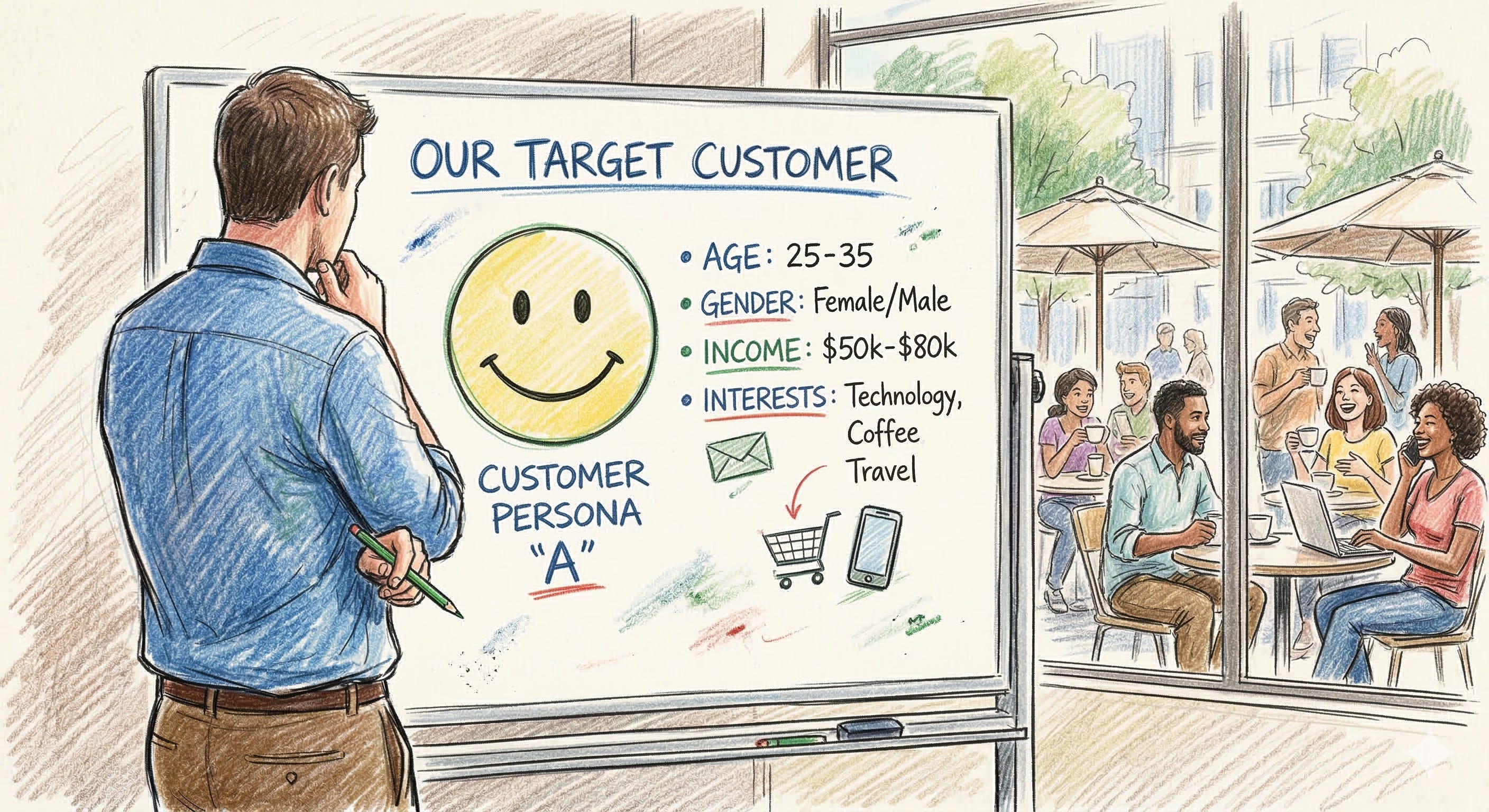
Where is your battle? Who are you trying to convince to use your product? Were you building with a real person in mind, or a “persona” on a whiteboard?
Our anime hero knew his enemy intimately. He knew the stage where they would fight, and what was required of him to win the battle. But customers aren’t enemies, they should be your allies! And do you really know them as intimately as you should as someone building something to serve them?
If your customer doesn’t know who you are, they likely won’t care how much product work you’ve done in secret. It’s usually better to simply get to know a potential customer, know their kids names, understand what problems they are facing in their business… and then offer to fix that problem. This would be more effective than 99% of founders who build a product in secret, and then wonder why they struggle so much when it comes to “GTM” or “sales” or whatever word they choose to describe connecting themselves to the real economy.
[ Think → Build → Sell ] was never a particularly effective strategy for the 99% of us who are not true, generationally talented inventors. Yes, I know, you’re thinking of exceptions. Henry Ford, Steve Jobs… if you’re here learning from me, you’re not them. Neither am I. Most of us can’t pull off true visionary strategy work, especially not in a vacuum.
But we want to! We want our ideas to just work. Why won’t they just work as we envisioned!?
This [ Think → Build → Sell ] temptation isn’t new, but I’ll argue that it’s becoming both more seductive, and less effective than in years past.
Here’s why.
Cratering cost of creation
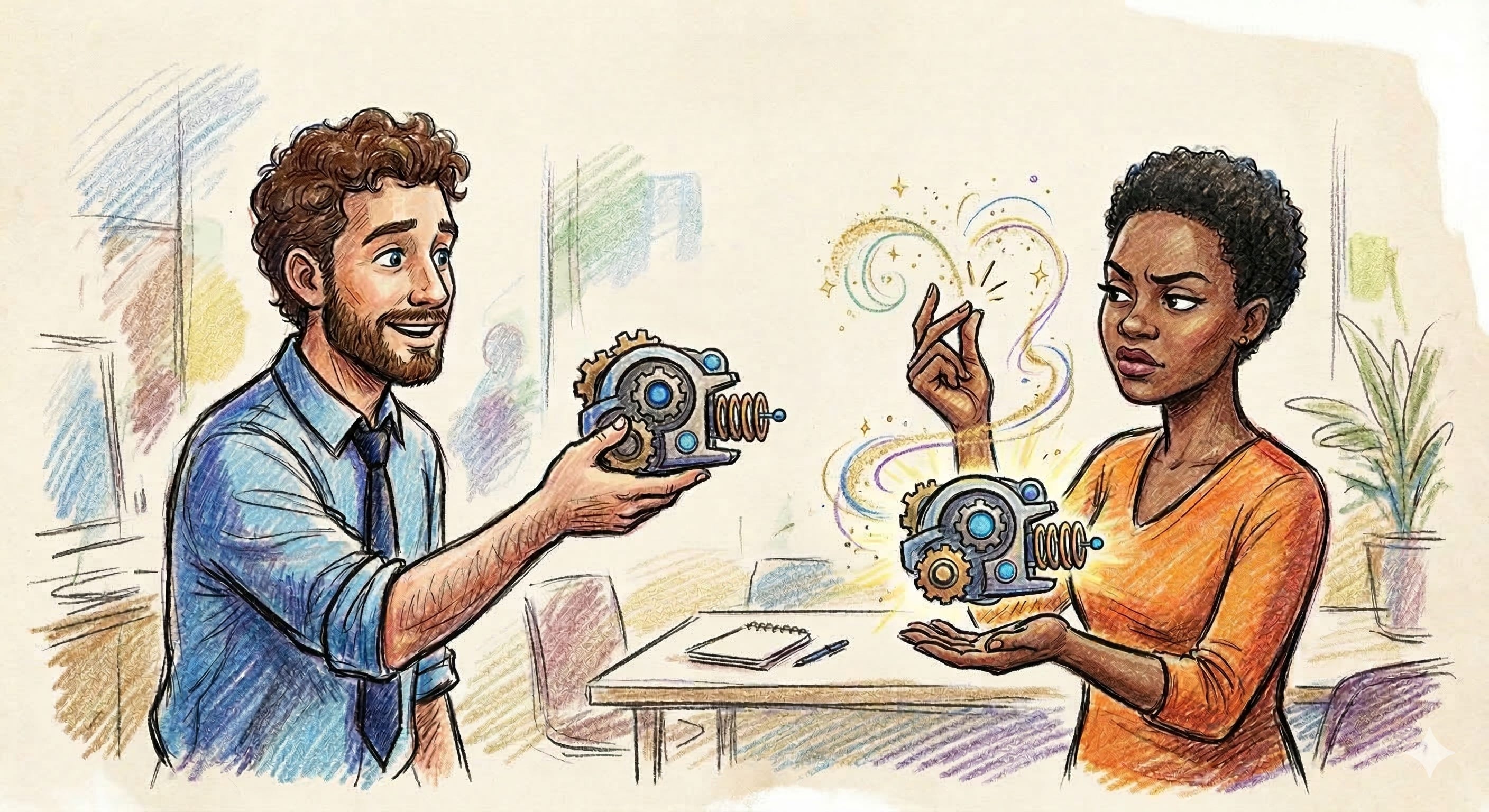
Generative AI has made it so easy for savvy people to build their own software that (least looks it) works exactly you ask, that customers have become practically allergic to brand new software products. Many established software companies are struggling in the AI era, but at least they have a brand reputation and stable, secure platforms to rely on.
A brand new piece of software from an upstart? It will instantly be compared not only to existing solutions in the market, but also to the theoretical self-built software platform, even if the customer hasn’t actually built anything themselves yet. Simply the thought that “I could probably build this myself” is enough to act as a powerful deterrent to spending money on software. General purpose AI is like a vaccine to the customer’s willingness to experiment with custom software. It’s harder for your solution to infect their budget.
Time is relative

Listen, I don’t understand E = MC^2. My knowledge of quantum physics is limited to a choppy synopsis of a 15 minute Youtube video. But let’s borrow this idea from science, anyway: time is relative.
Market time is relative.
Customers can step into that same time chamber. Competitors can. Your enemy has just as many training cycles as you do. Shipping fast is now table-stakes, not the advantage.
So much noise
So the product is too easy to build, time is compressed against us, and yet there’s a third headwind for standard SaaS platforms to consider.
Everyone has the time chamber, every software product comes out fully baked… and everyone is posting about it, both as humans and with their crappy AI content. The noise is off the charts.
Hyperbolic founders
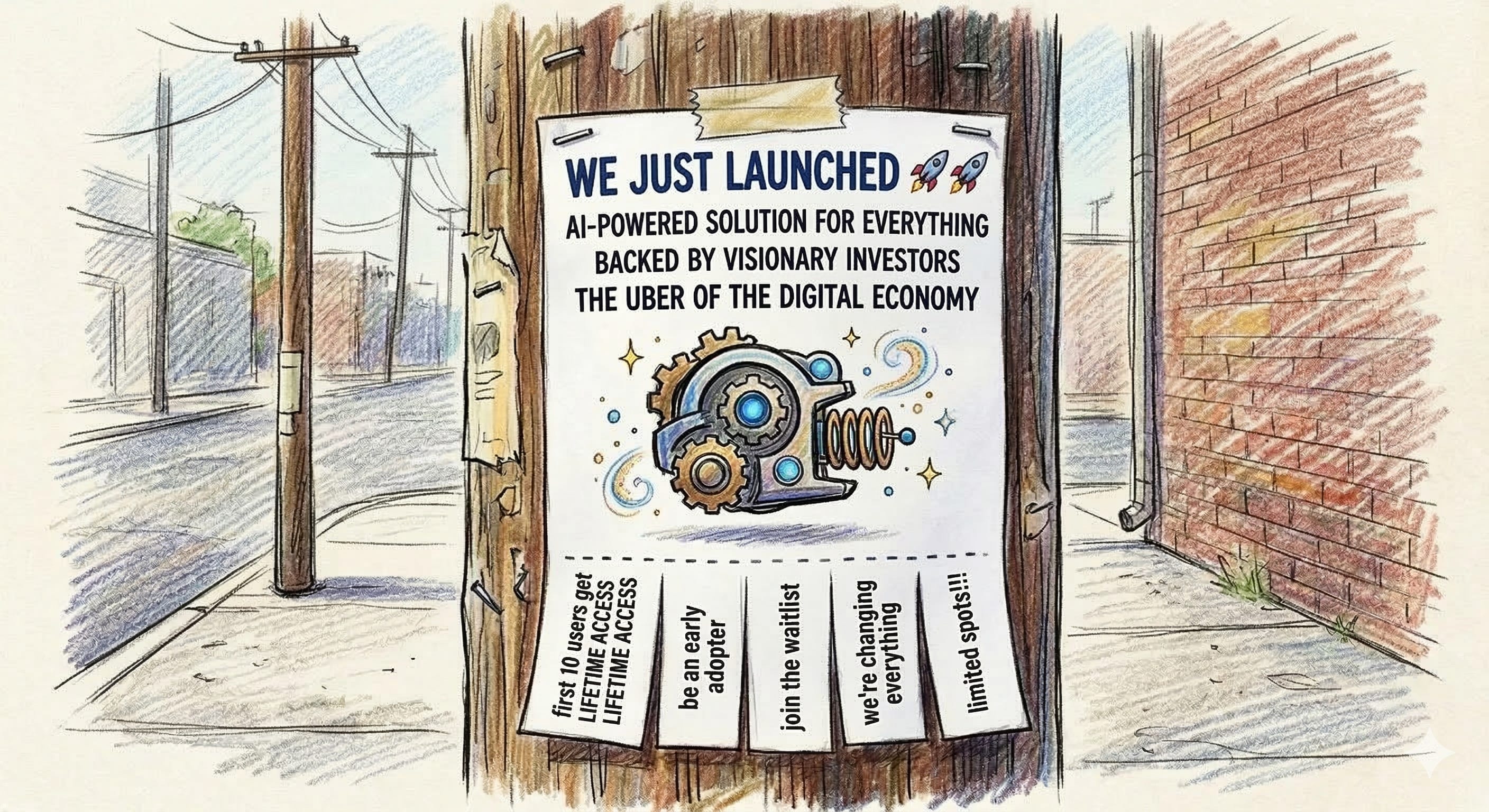
All this, and yet the winners in this era are seemingly growing faster than ever. People and algorithms alike boost the signal of the rare breakaway tool that separates from the pack.
The problem is, the breakout successes don’t seem rare, they seem normal, almost inevitable for some new AI tool to absolutely change our lives or dominate their industry segment. And some do. They just look normal because the winners get all the coverage and the losers quietly disappear. But 99% of startups never disrupt anything.
Founders trying to align themselves with that breakout success story make their announcements with maximum splash, and attempt raise the most money with the highest valuations. They go hyperbolic when the engagement doesn’t follow their announcements. Of course they do. Their identity is on the line.
But think back to our anime hero. He didn't emerge from the time chamber and post about his training arc. He didn't announce his power level. He had a specific enemy, a specific battlefield, and an appointment with fate before he ever started training.
They are visionaries, and their very self-worth is tied to their startup identity in many cases. If their announcements fail to garner that top 1% engagement, they’ll go hyperbolic with their messaging.
It seems to me, if you want to be one of the real winners, you need to start with a problem you understand deeply, or you need to be so close to your customers that they wouldn’t dream of ignoring you. Build for that fight, not the LinkedIn algorithm.
The time chamber only works if you already know who’s waiting for you on the other side. Do that, and you won’t need to go hyperbolic. Your customers will do it for you.
That's a bar: "The time chamber only works if you already know who’s waiting for you on the other side. Do that, and you won’t need to go hyperbolic. Your customers will do it for you."